Casual/smart dressing is the biggest trend from the A/W Milan catwalks according to Dolce & Gabbana, Moschino and Gucci. Combining jeans and tailored jacket is a cinch though compared to getting your footwear right for this in-between look.
The above might just might be the solution: G-Star’s Hybrid Specialists. These babies combine a tough leather upper with a pale sportswear sole. Hitting the street to walk to work has never been more comfortable, or on the money, style wise.
Benjamin Button can defy the fundamental laws of the universe and grow younger while I, and the rest of humankind, like speeding bullets, head towards epidermal entropy. How I respond to this truth is dictated by being male. A fact both cultural and biological. A well-matured man, like a bottle of vintage Port is often savored. Older women - perversely - are dismissed like corked plonk. It's the age-old double standard as unrelenting as time itself.
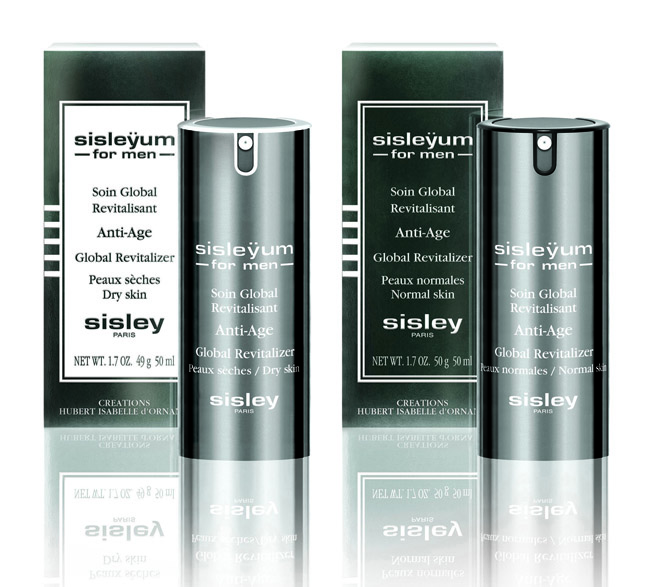
It also explains why I don't want to speed up or in any way ignore the fact my skin is wrinkling, sagging and will eventually resemble a mud pie. My face needs all the help it can get. Luckily, it might not be heading geriatric intensive care quite so soon. It's been given another throw of the dice of youth. For the past two months my face has been lapping up Sisleyum, the new men's skincare from French skincare power house, Sisley.
The smart thing about Sisleyum is that it's a straight-forward, twice daily application after cleansing. The other smart thing about it, is that once applied, it's a speeded up multitasker. Take hydration. Extract of wild pansy helps Aquaprin-3 develop which encourages water to circulate around the skin, making it appear smoother. It also puts the discomfort of razor burn behind you. White horehound and shea butter repair and sooth grazed your post-shaved skin alongside allantoin which is used to treat cuts. Tired looking skin? Olivine stimulated skin cells natural defenses and ant-free radicals malachite and smithsonite keep the troubler makers at bay. And fine lines and wrinkles flatten out from collagen producing extracts of alegkengi calyx and padina pavonica. While Vitamin A helps regulate the growth of new skin cells. There are more ingredients in Sisleyum than a book of recipes and they all work. I know. I look in the mirror. Sisleyum comes in two versions - a gel and a cream depending on your skin's oiliness and the time of year. It costs £150. I'm not sure why it's called Sisleyum. I might rename it Benjamin Button Butter.
Find Sisleyum in Harrods, Selfridges and House of Fraser stores from 15th March 2011
Roland Mouret’s first menswear collection is a smart take on subtle dressing. Men start forming an orderly queue now for these are highly covetable clothes.
‘It’s more of a wardrobe than a collection. Men over thirty like to dress quietly rather than to shout about the clothes that they’re wearing,’ says Roland Mouret about his new menswear label, Mr..
These are perhaps surprisingly low-key words from a man who over the past 15 years has been dressing fashion’s heavy-hitters such as Demi Moore and Carla Bruni. These women pull on his dresses for head-turning body-con sexiness. Whatever else Mouret’s womenswear might be, it’s rarely quiet.
‘It’s a mistake for a mature guy to try and look too trendy,’ he says, as if finding a wholly new aesthetic by designing for men. ‘It doesn’t work. He needs to keep things classic, tailored with just a little edge. Not in your face’.
This is Mouret’s personal philosophy of masculine dressing that also describes his own below-the-radar style. Is he more at ease with well- cut jeans and a tailored jacket than a super-slick, skinny suit? ‘That’s right, I am my own guinea-pig with this collection. Would I wear it? is a question I kept asking myself.’ He also tapped his female design team enquiring of them what they look for in a well-dressed man.
‘They told me the butt is really important which is why I’ve created a square shape with a horizontal pleat at the back of my jeans,’ he says, ‘this really flatters you from behind’. And hands up who doesn’t want his rear to look good in jeans? His are made from robust Japanese denim which with their subtle detailing and cut does indeed flatter even the most broad-in the-beam man.
Mouret’s care with fabrics runs throughout the line. Cashmere for the knitwear is from Italy, cotton poplin for the shirts is Swiss and the tweed for coats and suits is from England. There’s even a remarkably soft scarf made – strangely - from a form of milk protein. Mouret’s ideal man may leave the peacock dressing to his wife, but he obviously doesn’t deny himself the luxury of fine textures and fabrics.
Touching these tactile materials pleasurable enough, but it’s when you pull on the suiting in particular that Mouret’s startling talent for cutting becomes clear. These are skills he’s obviously honed from designing his intricate women’s line.
A pale grey wool suit hangs from broad, masculine shoulders. Assets I formerly didn’t know I possessed. ‘Everything starts with the shoulder,’ say Mouret reading the pleasant surprise on my face, ‘If you get the shoulder right, everything else falls into place.’ I look as if I’ve been intensely training my upper body in the gym for the past month.
And, as if understanding his new customer better than that customer knows himself, these suits are cut from one of two blocks – narrow or classic. This nods to the current trend for slimmer fitting suits while acknowledging the reality of the stockier body men acquire as they age. Mouret himself wears the regular cut suit.
Also in keeping with this quieter voice, Mouret showed his first men’s collection in Paris as a presentation rather than on a bells and whistles catwalk. ‘I wanted the press and buyers to see the construction, to feel the fabrics to see the details,’ he says patently excited about the feedback he has already received.
‘By getting up close you can see this small fold at the back of the shirt or the drape on the epaulettes, it’s a drape not cut. These small details are so important.’ But especially to men it would seem.
Mr. is available from Harrods, Selfridges and Browns. Suits start from £1400
'It isn't really a step down to develop a room fragrance rather than a regular perfume,' said world class 'nose' Olivier Polge at the launch of the opulent Fornasetti shop space in Selfridges today. He was talking about the brand's first room aroma, also known as, '8'.
Polge, the man who created Dior Homme fragrances and perfumes for Balenciaga, you might imagine could have been sniffy about this new project as he's a legend in the sometimes snooty world of haute perfumerie. 'It was an interesting challenge,' he said, after talking to a crowd of beauty editors while surrounded by a glistening array of Fornasetti fragranced products, 'the aroma has to fill a room rather than stay close to a body.'
For a brand that is a by-word for a particular kind of witty decorative chic for the past 50 years, Fornasetti's scented candles, sprays and burning sticks have been made, unsurprisingly, with the world's finest collaborators. Each candle's wax comes from CIR, France's oldest candle makers, for example, and are placed in ceramic pots by Ceramiche Dal Pra, the classic Vincenzan china company.
'My brief was to channel the smell of fine old furniture', said Polge of the distinctive cedarwod, tolu balsam and thyme aroma. Entry level Fornasetti, maybe, but in a world of it's own compared to anything in the world of Glade.
I blame Steve McQueen. When it comes to the sunglasses we want to wear now, it's the undimmed power of McQueen's style we’re striving to channel. Let’s face it, who in his right mind would say no to his favoured face furniture, the super-chic, all-black square-framed, Persol 649S?
Just imagining the square-jawed, crop-haired actor who made women swoon, behind the wheel of his Porsche 911 and wearing his signature shades is enough to getting men Google-ing Persol's web address (to save you time, here it is: www.persol.com).But Persol isn’t the only eyewear who smartly look back to the future.
‘Ever since we launched back in 1987 we’ve always been ahead of the pack when it comes to referencing the past,’ says Larry Leight, founder and creative director of Oliver Peoples. This is the LA-based eyewear brand that has helped more than any other to inspire our obsession with styles gone by.
When the company first showed their eponymous line of eyewear at a NYC expo in the same year, their vintage-inspired collection was about as far as you could get from the wrap-round, geometric styles popular at that time in the late 80s.
Check out the Riley or Sheldrake clip styles from the current Oliver People’s collection. These are modern flip-up clips combining ophthalmic lenses with witty ‘up/down’ sunglasses.With the lenses pushed up you look both surprised and stylish, an unlikely but good combination. These styles are as much about the 1950s as they are about today. And with this winter’s trend for quiff hairstyles, longer length jackets and beetle-crusher shoes, the 50s are on our style radar again.
Leight, originally an optician, kicked started his business by selling original, box fresh Baume and Mercier and American Optical frames from the 1970s. But it is his recent use of original frames tha has set this brand alight."This Original Vintage Collection is part of my family heritage,” says Leight, recalling the humble beginnings of Oliver Peoples.
Responding to a recent feature in the New York Times bemoaning the tweaking and upgrading that goes on with classic products, Leight dug around in his company’s headquarters in LA and stumbled across perfect condition MP-2 and O’Malley styles from his initial 1987 collection. These have been repackaged and launched on a retro-hungry public. All these styles require is a striped business shirt, braces and a brick-sized mobile device. I think an i-Pad will suffice.
And their collaboration in 2008 with legendary Hollywood producer and sunglass wearer, Robert Evans again produced a raft of retro styles the brand has become synonymous with. It has also made collections high end fashion brands like Prada, Paul Smith and most recently, Balmain - ‘Those who want the best in runway turn to Balmain,’ says Leight, ‘and those who want the best in eyewear turn to Oliver Peoples.’ And those who want the best of the past turn to Oliver Peoples as well.
'We’ve just launched our very own Tweed,’ says Niels van Rooyen, the jocular and ruddy creative director of Holland and Holland. ‘It was in the archive from 1830 and we’ve dusted it off and had it woven again by factories right here in the UK,’ he says beaming like a prowling Cheshire cat. He’s pointing at a subdued beige and brown fine tweed, a little like a puppy tooth check with a subtle line of purple thread of window pane check running across it.
Van Rooyen is talking me through the men’s winter collection, the core Holland and Holland kit (70% of its customers are men). This is essentially tough, practical and classic all weather gear for the shooting set. These sports are the brand’s DNA but for a while a few years ago H&H re-pitched itself as a luxury lifestyle brand, a kind of English Hermes but with hunting rifles instead of saddlery at it’s core. It was always an uneasy fit.
This move alienated the regular country set who had always bought their shooting gear from H&H, and it didn’t drive the sales to justify the changes. Van Rooyen left the brand during this difficult time, returning in glory three years later once this flirtation with fashion and luxury had faded from the house like an expensive exotic odor.
Yet, Van Rooyen isn’t one to miss the opportunity of pushing his product towards the young or newly rich who are making their first strides towards country pursuits. ‘I’m amazed by the popularity of trousers, ‘ he says with just the faintest twang of his South African roots and sounding ever-so slightly bonkers. ‘I think it’s the younger Royals, they’re less inclined to wear the cropped trousers and shooting socks that the Prince of Wales prefers.’In Holland and Holland’s world, this is obviously a seismic shift of taste, decorum and etiquette.
In this collection there’s a navy blazer with silvered gun cartridge buttons in a crease-resistant super 150 wool that would perfectly suit a formal dinner after a shoot. This is about as ‘fashion’ as the collection gets. And the necessary direction the brand has moved, explains Van Rooyen, seeingHolland and Holland as exclusively a shooting lifestyle company which produces ties, cashmere shirts, knitwear and their famous shooting socks (‘knitted with four needles by about 75 women in the north of England’) in an assortment of candy bright colours.
Loden, twill, corduroy, recoil pads (in leather to protect your shoulders from the gun’s kick back), shooting vests and tweed make up the lexicon of Holland and Holland’s unique offering. It’s a world of stiff upper lips, stout boots and making no fuss over driving rain, freezing fog or not getting a full brace of grouse on your first day’s shoot. It’s the world of the English upper classes at their most thrusting, sturdy and vaguely absurd.The hide bound world of Jeeves and Wooster, nanny and croquet feels only a paneled morning room away.
Which is all, of course, reassuring. The world may be going to the dogs, but the good folk at Holland and Holland are still making their ingenious ‘Fitwell’ shooting jackets – the distinctive double pleat over each shoulder which enables just enough give to raise your double bore shotgun to your shoulder. Which does make one feely a teensy bit sorry for the poor little grouse.
A deliberate disorientation by the store’s leather-capped, architect Peter Marino? Shoppers will feel so relieved on reaching their destination they’ll be more than happy to lay down £999 on a monogrammed ‘Keepall’ weekend bag if they arrive in one piece. This kind of purchase needs to fly off these shelves many times an hour to make this lavishly bedecked store pay. No doubt they will. Then the customer will then have something soft, squidgy and expensive to land on if they take a tumble back on the vertiginous stairs.
This is a titan of a store, the Vuitton’s most luxurious. ‘Maison’, excuse me. It is made from Aniegre wood, Corian, French embossed leather, Afromosia wood, French Lacquer, Portland stone, glass and engineered high-gloss wood veneer. Custom-made is the starting point for rugs, shot silk and leather chairs and sofas and drunken hand beaten metal tables stand tipsily on the menswear floor. There are also ceiling-suspended rotating planets made from glass and plastic, and in the sunglass area has a ‘central oculous’ like a big brother all-seeing eye, but way more chic. It is in fact a light feature resembling the human iris a useful reminder of what sunglasses are meant to protect.
I know Louis Vuitton’s schtick is travel, but with this store they manage to take you off the planet entirely to a universe far, far away. It’s a mighty achievement for the luxury French leather good manufacturer who first opened a shop in London 125 years ago. And in keeping with the 11%, global economy-defying profits LVMH posted over the past year.
Of course all this conspicuous, open-to-anyone access of these first three floors might feel a little too democratic, or even dangerous to some of the ‘maison’s’ most discreet, famous or fearful customers. These special customers will be whisked to the ‘Apartment’ – an open plan spaceon the 2nd floor thatis sectioned off into private shopping suites, each decked with fireplaces, antique and vintage furniture. Access is via a private lift.
The LV‘Maison’ is a sort of art gallery too. ‘Kiki’a sculpture by Japanese artist Takashi Murakami who has worked closely with the brand producing a candy-bright monogram, greets shoppers on the ground floor. Works by Richard Prince are also featured throughout the store. Downstairs look out for ‘Paws’, a work by Gilbert and George in the menswear department.
Unfortunately, the most fun piece of art on display, Michael Landy’s Credit Card Destroying Machine, will moved to a new home shortly. It was placed at the bottom of the stairs for the opening launch party. This brilliantly-named art work – a Heath Robinson-esque machine of stuck on grotesquerie - fright masks, doll faces and severed limbs, bells and whistles also scribbles abstractions onto pieces of A4 paper. Of course, it has to be moved. As all the credit card destroying – or, indeed, melting -will now be managed in-house by Louis Vuitton itself.
Did Health and Safety officers really sign off the vertiginous marble, brass, mirror and light-boxed staircase that links the three floors of Louis Vuitton’s newest, most lavish and high tech shop? For it’s a precarious assault course for any biped without a head for heights. With 23 square meters of banded light-box, steel and stone panels I wasn’t sure if I was on a flat surface or needing to take a step up or down. A Perspex escalator would have felt like solid ground.
A deliberate disorientation by the store’s leather-capped, architect Peter Marino? Shoppers will feel so relieved on reaching their destination they’ll be more than happy to lay down £999 on a monogrammed ‘Keepall’ weekend bag if they arrive in one piece. This kind of purchase needs to fly off these shelves many times an hour to make this lavishly bedecked store pay. No doubt they will. Then the customer will then have something soft, squidgy and expensive to land on if they take a tumble back on the vertiginous stairs.
This is a titan of a store, the Vuitton’s most luxurious. ‘Maison’, excuse me. It is made from Aniegre wood, Corian, French embossed leather, Afromosia wood, French Lacquer, Portland stone, glass and engineered high-gloss wood veneer. Custom-made is the starting point for rugs, shot silk and leather chairs and sofas and drunken hand beaten metal tables stand tipsily on the menswear floor. There are also ceiling-suspended rotating planets made from glass and plastic, and in the sunglass area has a ‘central oculous’ like a big brother all-seeing eye, but way more chic. It is in fact a light feature resembling the human iris a useful reminder of what sunglasses are meant to protect.
I know Louis Vuitton’s schtick is travel, but with this store they manage to take you off the planet entirely to a universe far, far away. It’s a mighty achievement for the luxury French leather good manufacturer who first opened a shop in London 125 years ago. And in keeping with the 11%, global economy-defying profits LVMH posted over the past year.
Of course all this conspicuous, open-to-anyone access of these first three floors might feel a little too democratic, or even dangerous to some of the ‘maison’s’ most discreet, famous or fearful customers. These special customers will be whisked to the ‘Apartment’ – an open plan space on the 2nd floor that is sectioned off into private shopping suites, each decked with fireplaces, antique and vintage furniture. Access is via a private lift.
The LV ‘Maison’ is a sort of art gallery too. ‘Kiki’ a sculpture by Japanese artist Takashi Murakami who has worked closely with the brand producing a candy-bright monogram, greets shoppers on the ground floor. Works by Richard Prince are also featured throughout the store. Downstairs look out for ‘Paws’, a work by Gilbert and George in the menswear department.
Unfortunately, the most fun piece of art on display, Michael Landy’s Credit Card Destroying Machine, will moved to a new home shortly. It was placed at the bottom of the stairs for the opening launch party. This brilliantly-named art work – a Heath Robinson-esque machine of stuck on grotesquerie - fright masks, doll faces and severed limbs, bells and whistles also scribbles abstractions onto pieces of A4 paper. Of course, it has to be moved. As all the credit card destroying – or, indeed, melting - will now be managed in-house by Louis Vuitton itself.
Tommy Hilfiger and the Keith Haring Foundation's trainer collaboration would certainly have been worn by the pop artist himself.
Not for Keith Haring the snobbery and obsession with money found in the art market in 1980s New York. An obsession, indeed, that is even more rampant today. Haring’s art – linear graphics celebrating leaping, dancing human figures, dogs, babies, snakes and any other objects that could be rendered by his hand in a sinuous black line – turned up on subway station walls, street corners, badges and extremely large pieces of paper. Haring took art to people even when those people were on the street busily trying to head elsewhere.
Which makes the collaboration between Tommy Hilfiger and the Keith Haring Foundation a neat marriage. The artist’s figures and buzzing hieroglyphs are emblazoned onto trainers and boots – so you pull the art onto your feet and then hit the street in them, making them far away from the refined world of the gallery where most art would like to see itself comfortably leaning on a pristine white wall.
Both Tommy Hilfiger and the Keith Haring Foundation help youngsters through education and support for those affected by AIDS. Both these foundations are linked by developing these trainers.
Haring’s tragically short life – he died at 32 in 1990 of AIDS – was full of a prodigious creativity and an intense work schedule making his art some of the most recognized and loved of the past thirty years. The exuberance and child-like charm of his work is life affirming like a vertical plunge on a roller coaster with you hands thrust in the air. And, of course, trainers are just the right footwear to be leaping through life in.
As the Haring himself said, "I am interested in making art to be experienced and explored by as many individuals as possible with as many different individual ideas about the given piece with no final meaning attached.” He wrote these words in 1978 when he first arrived in New York. Which if you change the word art to fashion, this works as a manifesto for how we dress today.
The higher top ankle boot styles are the style cognoscenti’s choice this summer and I’ll be wearing the ones in bright blue. If you’re going to wear a cult-artists designs on your feet then why be shy by hiding them in black or grey?
Men’s trainers from £89.99 exclusively at Dover Street Market from 7th May
4 days of men’s fashion shows in Milan is both an obstacle course and a race.
Show tickets turn up late, or not at all. I lost my driver on the corner of Via San’Andrea and Via Montenapoleone among 80 identi-kit chauffeurs and navy sedans – twice. And some stylish Milanese is, ratcheting up an off-the-scale bella figura, probably wearing my Persol 714 limited edition sunglasses that I left on my seat after the Roberto Cavalli show. Dammit!
And let’s not forget the barrel of Chianti on my last night due to the relief of getting through it all, ensuring I could scarcely focus on any moving object the following day.
Reassuringly though, many designers returned to the core values of their brands, which in Gucci’s case led to a show of such understated elegance – vintage silk scarf-lined beige jackets, narrow pants and classic snaffle loafers – that the bling of the last few seasons was as quickly forgotten as last month’s Xmas decorations. Creative director Frida Giannini said that by looking in the archives she’d found a way of pushing the brand forward – which could be a motto for this season.
Salvatore Ferragamo under the design reins of Massimiliano Giornetti (a name that can only be said after a slug of Barolo), took above-the-knee great coats and oversized scarves as his vaguely Argentinian theme played out to a soundtrack of beating horses’ hooves.Autumnal browns and deep reds stood out in a season that was more often than not monochrome.In fact, outer wear, especially coats, played out on catwalks far more than suiting, accessories or hats. It was as if Milan was saying: buy yourself just one over-sized coat and you can brace against whatever the world throws at you.
Of course not all followed this simple idea. Alexander McQueen took a post-apocalyptic theme with a show dominated by sand-blasted, skull-printed suits and skin-tight head stockings as if the future may well resemble the world of Cormac McCarthy’s bleak novel, The Road.
I think I’d rather sweep through life in a Ferragamo great coat, or if I was feeling futuristic, donning one of Versace’s skintight leather biker jackets. Alexander Plokhov, the house’s new design director said he was – just like Giannini at Gucci – going back to Versace’s brand values. The Versace man suddenly looked purposeful again in his Matrix-esque sunglasses and ultra-slicked hair.
For those excited that fashion is going to end up eating itself, proof was found on the Prada runway. A third of the show’s exits were women wearing the brand’s pre-Fall collection, which looked oddly like what the men were wearing, and strangely hardly any press commented on. Perhaps they’d all been on the Chianti too and hadn’t noticed the 15 girls filing past them. Both genders wore golfing shoes that had certainly hit the bottle labelled, ‘Drink Me’, sprouting impossibly long tassled tongues. They were hardly desirable, but I could see Tiger Woods sporting them – anything to distract from his imploding personal life.
Milan Mukmirovic, creative director at Trussardi, didn’t show a catwalk collection at all, preferring to present his ideas on the top floor of the Trussardi store opposite the famous La Scala opera house. Which was a surprising venue for his dressed down chunky knitwear, Alpine boots and puffa jackets. “We’ve brought our prices down by about 20%,” said fashion’s very own renaissance man. “Men aren’t interested in the catwalk any more, they just want to find clothes they can wear.” Which was probably the sanest but also the dullest thing I heard all week.
So a pat on the back then for Vivienne Westwood who took a very special curtain call after her A/W collection, which was kick-started by a model stumbling out of a cardboard box onto the catwalk (how long had he been in there? Poor man).Dame Viv was wheeled out to take her applause on a hospital trolley. It was a Derelict moment straight out of the film Zoolander. Catwalks. How could we possibly live without them?
Underwear brand, Sunspel offer nothing new under the sun. Classic white T-shirt. Check. Fine guage polo shirt. Check. Lightweight cotton boxer shorts and fine cotton briefs. Check again.And their colour spectrum– black, marl grey, white with the occasional teal blue or brown in a merino sweater - will hardly set your wardrobe alight. Yet, when I discovered the pleasure of wearing Sunspel Egyptian cotton T-shirts a few years ago, I can no longer bring myself to pull on any other brand.
‘The secret is in our fabric,’ says Dominic Hazlehurst, co-owner of Sunspel , ‘we only use the biggest staples – the bud of fibre at the top of a cotton plant - which gives us longer and smoother threads for our garments.’As well as this, many of Sunspel’s cotton items are ‘flamed’, which further smoothes the cotton as microscopic knots and puckers are burnt off each thread. This process gives their T-shirts and boxer shorts a smart-looking sheen that feels remarkably comfortable against your skin. Talking of boxer shorts, Sunspel were the first to launch this style to the UK from the States in 1947. And they made the world’s most famous boxer shorts -worn by Nick Kamen in that iconic 80’s Levi’s TV ad.
It is this refined quality in these menswear basics that have made Sunspel the place to go if you’re an already established menswear brand such as Richard James or Kris Van Assche, and you want to launch an underwear range.It’s fabrics like their Q14 lace-like cotton, developed in the 1930s, which is both breathable and warm, which give them the edge. ‘And we employ 35 machinists in our Long Eaton factory just outside of Nottingham,’ says Hazlehurst, ‘so we can control every part of the manufacturing process to make sure our standards don’t dip.’
Which goes some way to explain why Daniel Craig as James Bond, is seen wearing an ultra lightweight, Sunspel ‘Q75’ polo shirt in Casino Royale, aSunspel fabric developed for the heat of the Italian Riviera in the 50’s. And another reason to duck into their pop-up shop currently rubbing up next to Dunhill’s Bourdon House on Davies Street, Mayfair until January 2010. Which is about as James Bond an address as you’re likely to find.
Sunspel pop-up shop, 10-12 Davies Street, London W1
“The concept was actually very simple,” says Jason Broderick, general merchandise manager for menswear at Harrods, “we just wanted it to be the most luxurious menswear department in the world.” Broderick and Marigay McKee, Fashion and Beauty Director, are co-creators - with US architectural firm, Callison - of the slick gold, taupe and metallic ground floor. It’s a gilded backdrop for the sharpest menswear; a playground designed for Hedge Funders with an AmEx Centurion card and an hour to spare.
The £9 million menswear department curves around the south eastern corner of the world’s most famous department store bathing Bottega Veneta, Ralph Lauren, Giorgio Armani, Dunhill, Turnbull and Asser, Lanvin, Prada and Dolce & Gabbana and others in a golden light that seems to suggest that if you pull on that two button cashmere Bottega jacket (£1600) the world might just become a better place. Even by only a cuff length.
“Traditionally we had the scenario of 'the grey suits are over here sir' or 'the navy this way...' and so on,” says Broderick. “Whereas men today want to feel and live a retail experience by looking out for things by themselves. Men have become more confident shopping for their clothes over the last ten years in ways that traditionally only women did.” Hence the shop-within-shop idea giving each brand the space to create their own signature within the overall Harrods banner. At Louis Vuitton their emblem of luxurious travel is suggested with their monogrammed upended trunks (£21,500 each). While outsize black ginger jars like lacquered sentinels give the Ralph Lauren Purple Label its esoteric air.
Exclusives and one-offs are a Harrods signature (as if gulls’ eggs really could be available throughout the year if only you knew where to look). This brand value is embraced in the menswear department with one-of-a-kind items scattered throughout the collections. Just one Burberry trench coat, signed in the lining by its designer Christopher Bailey, was left on the rail during my recent visit. Though my guess is it’ll be long gone by the time you’re reading these words.
The-not-quite-finished basement houses Tom Ford’s only London ‘shop’ – a paean to masculine sartorial excess (I defy anyone to not find a home for his tan alligator, chunky zipped bowling bag, as long as they’ve got £15,000 handy). It plays its occult seductions opposite the personal shopping department and alongside other men’s brands such as Neil Barratt, Paul Smith and Rag and Bone. This space is itching to become the throbbing bass to the heady sartorial notes upstairs.
The dedicated menswear day at LFW signifies both what we men choose to wear being of increasing importance to an industry in tough economic times, but also a welcome change of pace and mood to the high-jinx, feeding-frenzy called womenswear.
Men’s clothing presents itself, even in a catwalk setting, in a calm and measured way. Suave Cary Grant to the women's gobby Lady Gaga. Without every being dull, of course. And true to the renegade spirit of London’s fashion weeks past – there was the eye-popping clash of the unwearable pressed up against the eccentric, nodding towards the slick and covetable.
Into the latter group was Royal College of Art alumna, Carolyn Massey’s collection, inspired in part by a camping trip to Dungeness, hence the drawstring detailed caghoules, so refined that they at times morphed into shirts. Her trousers were sharp and flat-fronted and her shorts, neatly tailored. The stand out piece, a multi-pocketed caghoul-inspired top summed up the luxury utilitarian spirit of the show.
The big guns, including Mr High Street himself, Philip Green, was a front row presence for the Topman sponsored MAN shows where Katie Eary’s disturbing cut-out collection had models painted with exposed sinews, blood vessels and bones. While Topman’s own collection, a refined take on youthful, sports-influenced menswear – cotton trousers and wide short-sleeved shirts, trod the commercial/edge line with easy confidence.
The evening’s selection of tailor-to-watch, Wintle, a Child of the Jago, Tim Soar and outré B-store climaxed what was a confident day of British men’s fashion. Noteworthy were Wintle’s pale, loose-cut tailoring with contrast ribboned edging and bStore’s preppy elegance of buttoned up, loose shirts and old-school satchels. We may not choose to wear all of what was on offer, but with this standard of product, we’ll certainly be spoilt for choice.
‘We get the style set coming in on a Saturdays, cool couples in matching trainers and a dog,’ says Eddie Pendergast, a kid with a shiny new toy. And why shouldn’t he be grinning, his just-a-month-open store has swiftly gained a healthy slice of local consumer ker-ching. ‘Throughout the week it’s architects, the creative’s from Hoxton and Shoreditch, just look at those people going by. Is there a more diverse street in London?’
And he’s right.As we peer through the picture windows at the front of Pendergast’s latest venture, Present (launched with his business partner, Steve Davies), the view outside is almost comic in its clichés of urban cool. Dreadlocked skate kids in Keds and baggy Firetrap jeans dodging around vagrants and anxious City types who’ve slipped through the north edge of the Square Mile like spies under the Berlin Wall. And what they all do as they glide, amble or shuffle past the Present window is look inside.
Where they see Gwilm Davies, recent winner of the World Barista Championship (making him the best coffee maker in the world, indeed) holding court over his treasured La Victoria Arduino machine as it wafts the mouth-watering aroma of freshly brewed Arabica coffee. This neat placement of both talent and coffee ensures a tight knot of drinkers at the entrance intriguing passers by to head deeper inside the shop. ‘The action at the door is deliberate, it gets people interested to explore further,’ says Pendergast.
Where they find asurprisingly welcoming 1200 square foot industrial space. The floors may be poured concrete, but the mixture of period display cabinets and high tech metal and wood shelving softens the effect with the help of magazines like limited distribution Monocle, vintage Sex Pistol posters and handmade Ceri Trudon scented candles.Artfully worn-in Haversack tailoring from Japan (before sold only at Liberty), and Ramdane Touhami’s cult brand, Resistance R T with its clashing checked bombers and gilets with satin linings, compete with Davies’ own-design Tricker hybrid boots, the shop’s biggest hit so far. This is menswear as sensory overload – colour, aroma and detail grabbing your attention from every surface.
It’s the confidence with which Pendergast and Davies, who between them have over thirty five years in menswear design and retailing, mix up diverse elements at price points from the eye-watering to the every day (a cup of Gwilm’s coffee is a steal at £2.40 for a flat white) which will likely ensure their success. With a smart roster of brands lining up to join in the fun including Macintosh and a 600 square feet of basement about to be integrated into the retail space, this is no longer just the present but, indeed, the future too…
I remember a colleague cajoling me to buy for his wife a
bottle of Aramis’ New West for Him, the next time I went to the States. This was about twelve years ago when New West was impossible to track down in England and it was chic and ironic for women to wear men’s fragrances. Which it still is, perhaps for younger womenstill experimenting with their signature smell.
I was under instruction to buy in bulk, with directions to the particular branch of Bloomingdales that carried the biggest supplies. This dedication to the cause of fragrance shows something of the passion, even ardour they can inspire, or in this case, perhaps addiction! So with this kind of frenzied, dedicated market still out there, it’s not surprising that Aramis have decided to relaunch six of their past classic aromas from the back of their fragrance cupboard.
‘Each of the Aramis fragrances has a highly distinctive personality,’ says Roja Dove, ‘and as each men’s fragrances tend to follow a few clichéd accords, each fragrance in the Aramis Collection is polarizing – love them or hate them, if you love one, nothing else will do.’ Which, I guess must have been the case for my colleague’s wife, and her New West habit.
The six relaunched classic fragrances from Aramis are, Aramis 900, Devin, J-H-L, Tuscany Per Uomo, New West for Him and Aramis Life. For Roja Dove it’s the woody note found in many of fragrances that make them so attractive and masculine, ‘this woodiness is sublimated by mossy notes. Freshness is also very important and is generally achieved by the use of citrus blends underscored by aromatic, herbal, notes,’ he says. Imagine having an amble through the New Forest with the smell of damp wood in the air, a qualityparticularly noticeable in Aramis 900, Devin, Tuscany Per Uomo and Aramis Life.
The quality these fragrances each have, apart from a linking masculinity, like a rock solid scrum, is their power to last on your skin. Unlike many more contemporary fragrances which seem to need to be carried in your briefcase and reapplied throughout the day, these can be splashed on just once in the morning and manage to quietly linger into evening. ‘The ingredients in these fragrances carry little volatility,’ says Dove, ‘the element which fixes a fragrance, often referred to as the base notes, are what stabilizes it and keeps it doing its job on your skin.’ Which explains with all the mossy, woody, resinous and animalic notes found in all these aromas why they tend to last. So maybe our dads did have it right back in, 1974 when Aramis 900 first launched - they must have had far better things to be getting on with than worrying about reapplying their fragrance.
All the relaunched fragrances in The Gentlemen’s Collection are £44 for a 100ml bottle. Sold exclusively at Harrods from 16th August, nationwide from 7th September 2009.
Once in a while a stylist comes along who creates images of such arresting power that their input can no longer be overlooked, and their name becomes as important as the photographer's. Simon Foxton's catalogue of muscled, handsome, dynamic men - work he's been producing for over twenty years - is a case in point.
Wardrobe Master: You have an exhibition coming up at London's Photographer's Gallery, that seems pretty unique for a stylist?
Simon Foxton: Yes, as far as I know, 'About A Boy', is the only exhibition of a stylist's work ever put on. I feel flattered and very honoured to have been asked.
WM: What will it be like?
SF: It's a survey of all my work based around three photographers who I've worked with the most- Nick Knight, Jason Evans and Alasdair McLellan. There will be a wall at the back devoted to my portrait-based work and some of my scrap books, from which I generate my ideas, will be displayed too.
WM: You work exclusively in menswear, why is that?
SF: I was at St Martins (art college) and my interest always lay in menswear. I don't have to think about what makes a man look good or interesting - it comes easily to me.
WM: Where did your work first appear?
SF: I started working with I-D Magazine in 1984 which has been my base and home ever since. They have always given me the freedom to express my ideas.
WM: You're a Fashion Director there, what does that involve?
SF: Well, I'm not really a Fashion Director, as such, I don't have the people skills! I think styling and being a Fashion Director are very different jobs. It's rare to find both in one person.
WM: And you're involved with Fantastic Man magazine too...
SF: Yes, I came on board 2 or 3 years ago - it's a magazine with a very definite point of view.
WM: Tell me about your scrap books and how you come up with your ideas.
SF: I don't hoard magazines in my home, but I do tear out images which I find interesting then I stash them in a box in my bedroom. Once or twice a year I go through the box and pull out all the pictures and start to make scrap books. It's so useful to me as they act as a reminder of what I like.
WM: Is there one particular story of image that stands out for you?
SF: The minotaur picture shot for the cover of Arena Homme Plus a few years ago by Nick Knight, which is also the image for my exhibition. We were playing around and I decided another guy should wrap his arms around our main model and the image took off from there. It was a very organic process, which is how I like to work. I don't like to have things too planned -it's good to be playful and to see what happens.
WM: How does someone working as creatively as you do feel about the recession?
SF: In times like these, there are much more serious parameters. You have to keep track with the advertising, to be careful. But in more straightened times there tends to be more creative ideas pushing up too. There is always a need to be entertained and delighted.
WM: What in your work entertains and delights?
SF: Most of my work is cartoon-ish. My general aesthetic is to use healthy looking men wearing bright colours. It's quite pop-like, really. When I work with Nick (Knight), he tends to push for the more violent side of things. And I use clothing or fashion to make a picture. I've always felt resistant to the idea of trends, and I'm not really into fashion or menswear for their sake only. After all, a thing of beauty is a joy forever.
For further information about Simon's exhbition which opens on the 17th July, follow the link below:
I have two sleeveless sweaters - tank tops - which are fronted with diamond patterns. The first is bottle green, black and red with a nod to Jack Nicklaus in its colour and fitted shape. It would look at home atop stout hiking boots or on Andre 2000's back. The other, a chunky muted tank, carries its diamonds in moss green, grey and cream. Various of my socks, often by Burlington, are starred with diamonds too - making the journey from trouser hem to shoe an eye-poppingly graphic one.
Dismiss your ideas of retired middle Englanders and subscribers to Golfer's World - diamond knits add colour, bold shape and interest to knits. Sleeveless, they can be worn like a waistcoat under a jacket doing the work of a bold tie without the formality. Start sifting for your gems in the kinds of department store gent's sections that you'd normally avoid, for diamonds are found in the roughest of places. Base camp brands are Boss Golf, Tommy Hilfiger, Burlington, and Pringle - for advanced searches sniff out your gems at Dolce & Gabbana, Burberry, Junya Watanabe, Comme des Garcons or Walter van Beirendonck.
A wedding invitation without dress requirements is a mixed blessing. The alternative - a request for lounge suits or morning attire - will always bring a glum feeling of predictability - like having to wear your school uniform on the weekend.
With this laxity there is no less a need to be both smart and individual, respectful of the formality of the occasion, without insulting your hosts in a pair of battered Converse trainers. A neat solution - which somehow keeps a suit or tailored jacket looking smart, while avoiding business vernacular - is the buttoned up shirt.
Traditionally a 'mummy's boy' staple, this idea has recently lost it's geeky aura, to become an eminently useful dressing solution. So, thanks then to Prada, Jil Sander, Raf Simons and Hermes (who featured this look in their A/W 09 collection, see picture) as well as other design minimalists, for giving us this idea.
Style do's and don'ts for the modern wedding guest:
1. Do wear brogues, Oxfords, blunt-toe loafers - the style is less important than the fact you're wearing shoes. Boots, trainers or sandals (unless the wedding is on a beach) should be left at home.
2. Don't let your style pegging slip below a tailored jacket and trousers. At a push, slim cut darkest indigo jeans are acceptable.
3. Don't wear colourful braces, loud ties, bow-ties etc unless you're used to such things. You could end up looking wary and self conscious with such a bold step outside of your sartorial comfort zone.
4. Do add colour with a breast pocket silk square. An appropriately dandy-ish for wedding days (or, in my case, any days).
There is only one style of shorts to wear this summer - the tailored, or 'smart' short. Why? Because compared to the Bermuda, military baggy or three quarter lengths you may choose to stumble around in while cooking a barbeque - these shorts have 'suitable for work' stamped on them. And, if they're suitable for your office, they're also suitable for the bar, restaurant and even for meeting your in-laws. But make sure it's a warm day, or you'll be mistaken for a proto-naturist.
Usefully, tailored short have - slimming lack of flag-like fabric; a leg-enhancing crop above the knee, and the lure of smartening up your look even more with a casual tailored jacket. This, of course, should never 'match' the shorts in colour and fabric, as last summer's 'short suit' reminded us - a clown-like outfit masquerading as office-wear.
The snug shorts featured in the picture are by Neil Barratt and come in at just over £200. For similar high street versions try Topman, H&M and Gap. Now, of course, there's just the matter of how your legs look. I feel a blog coming on...
Goyard's bags, Hermes' ties and Oliver Goldsmith's sunglasses, are products which defy conventional business logic. This gear is insanely expensive and knock-offs pour like a river from Eastern sweatshops. Yet, still these brands thrive like defiantly territorial endangered species, while original pieces hold their price if kept in a box-fresh state. To that list we can add Lucien Pellat-Finet's cashmere sweaters as interpreted by Japanese artist, Mr.
There's something heroic about all this. When you can pick up a half decent cashmere sweater for under £50, explain the logic to put down £500 on an entry-level LPF one, which may not look at any different? If you're able to buy into this end of the market (and, of course, the quality of cashmere here is about as good as it gets), it's in the collaborations where the brand gets interesting.
Acknowledging the importance of the Japanese market, Pellat-Finet has collaborated with Japanese artists including Murakami in past seassons, ensuring a market for his sweaters in Tokyo and the world beyond. The collaboration this year with Mr., whose work has a retro kitsch manga appeal, makes your purchase not only wearable (in an ironic, kidult kind of way), but collectible too. This stuff will never be made again and these pieces will likely hold their value in years to come. Which, of course, can never be said for that bobbled up piece of tat from the high street masquerading as the real thing.